
Information Technology now underpins almost every aspect of teaching, learning, and operations across education. From virtual learning environments to cybersecurity, IT teams support essential services that keep institutions functioning. Yet many staff and students remain unsure about what the IT department actually provides, how to access support, and what level of service to expect.
A well‑designed IT service catalogue addresses this gap by providing clarity, transparency, and a shared understanding of how IT services are delivered.
Why Service Catalogues Matter
IT teams often work under significant pressure to maintain core systems and keep services running smoothly. User perceptions of IT frequently begin the moment a ticket is submitted, making it vital to manage expectations from the outset.
A service catalogue:
- Clarifies responsibilities and priorities so users understand why some issues take precedence.
- Demystifies IT operations, which often span everything from password resets and hardware support to application troubleshooting and exam‑related technologies.
- Provides transparency around the scale and complexity of work happening behind the scenes.
As technology becomes more integrated across institutions, IT teams are expected to support a growing range of areas—AV technology, learning technologies, finance systems, student records, and more. Without a clearly defined catalogue, the boundaries of IT support can become blurred.
What a Good Service Catalogue Should Deliver
An effective IT service catalogue acts as a single, user‑friendly reference point for all services the IT department provides. Think of it as a shop window: a clear, accessible place where staff and students can find what they need without confusion.
A strong service catalogue typically includes:
- A list of available IT services
- The target audience for each service
- How to request the service
- Expected service levels and support processes
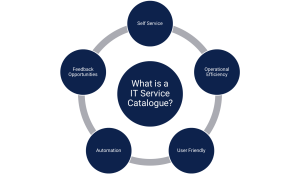
When designed well, a service catalogue improves the service value chain, strengthens guiding principles, and supports continual improvement. It also contributes to operational efficiency by reducing unnecessary requests and enabling greater self‑service.
To help you to get started, please find a couple of resources below.
In addition, further guidance can be found here
An IT Service Catalogue should be developed with the following contributing factors.